Stacy Keach Dies at 85: Remembering the ‘Roadgames,’ ‘Body Bags’ and ‘Ninth Configuration’ Star’s Underrated Horror Legacy
Stacy Keach, the gravel-voiced actor who spent six decades moving between Shakespeare, private-eye pulp and some of the strangest genre films of the late 20th century, has died at 85. His wife, Małgosia Tomassi Keach, said he died Tuesday, Nov. 10, at the family's home in Magdalenka, Poland, after a long fight with a serious heart condition and heart failure.
Most obituaries this week will lead with Mike Hammer, and fairly so. But horror fans knew a different Keach: the trucker playing cat-and-mouse with a killer in Roadgames , the vain businessman whose miracle hair transplant goes very wrong in John Carpenter's Body Bags , the haunted Marine psychiatrist at the center of William Peter Blatty's The Ninth Configuration. This piece covers what we know about his death, the career that made him, and the genre work that deserves a second look right now.
What we know
Keach died Tuesday, Nov. 10, 2026, at home in Magdalenka, a village just outside Warsaw. News of his death broke Tuesday evening via TMZ and was confirmed Wednesday by Fox News, Newsweek, Variety and others, all citing a statement from Tomassi Keach. In it she described his illness as a long and difficult battle with heart failure, and told The Hollywood Reporter, per Newsweek, that "He was a true warrior."
He is survived by his wife, whom he married in 1986, and their two children, Shannon and Karolina. His brother, actor and filmmaker James Keach, was his co-star in one of his best-loved westerns. Their father, Stacy Keach Sr., was a working actor and director in his own right.
Keach's health had been a public concern since June 2017, when he suffered a heart attack on stage at Chicago's Goodman Theatre during a one-man Hemingway show and later underwent a triple bypass, according to NTD. He kept working afterward, landing roles on The Blacklist and Man with a Plan , and his last screen role, per Cover Media, came in 2025's Jay Kelly.
There is no official studio trailer or tribute video to embed for this story, so we're letting the work speak below instead.
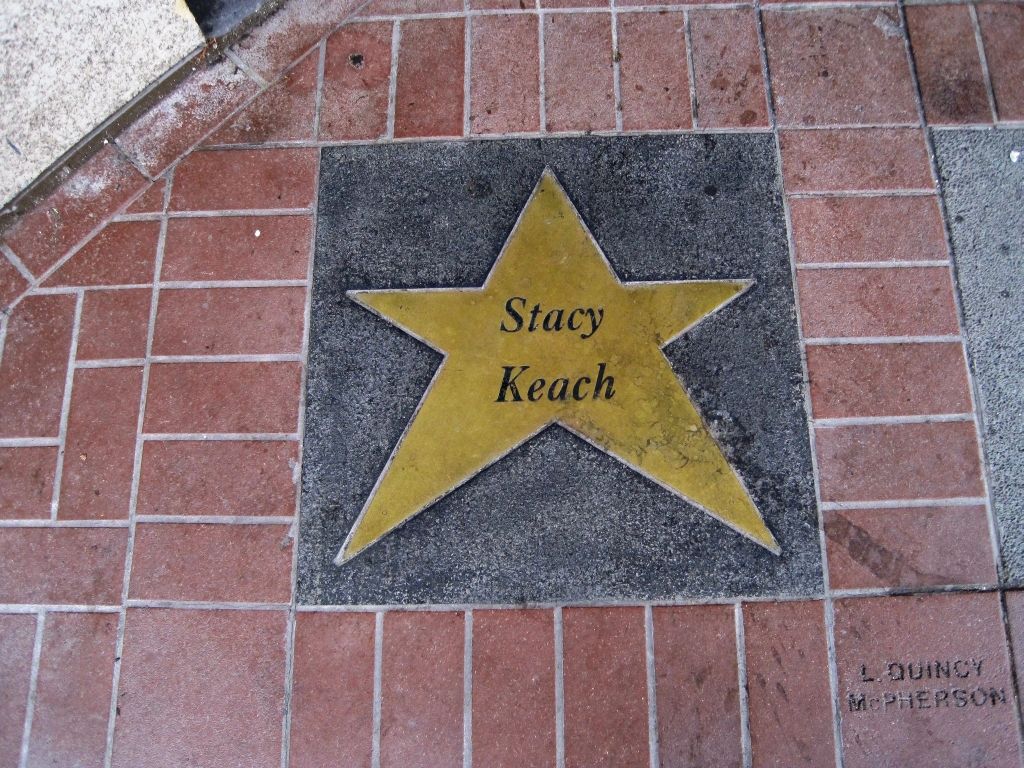
Photo: Stacy Keach via Wikimedia Commons ( author and license).

Who he was: Shakespeare first, everything else second
Walter Stacy Keach Jr. was born June 2, 1941, in Savannah, Georgia. He was born with a cleft lip and a partial cleft palate, went through numerous surgeries as a child, and later served as honorary chairman of the Cleft Palate Foundation. The scar became part of his screen face, the kind of feature a lesser industry would have hidden and one that instead helped make him unforgettable.
He trained hard: an English and drama degree from UC Berkeley in 1963, an MFA from the Yale School of Drama in 1966, and a Fulbright to the London Academy of Music and Dramatic Art. On stage he played the title role in the political satire MacBird! in 1967, earned a Tony nomination as Buffalo Bill in Broadway's Indians in 1969, and played Falstaff, Peer Gynt and Edmund in King Lear. His 1972 Hamlet in Central Park drew a New York Times rave from Clive Barnes, who called it "one of the great Hamlets of our time." He collected four Drama Desk Awards and three Helen Hayes Awards, the last for his own King Lear in 2009.
Film came fast. He played Doc Holliday in Doc (1971) opposite Faye Dunaway, then a washed-up boxer in John Huston's acclaimed Fat City (1972) and a rookie cop beside George C. Scott in The New Centurions the same year. He was Martin Luther in Luther (1974), the hapless Sgt. Stedenko in Cheech & Chong's Up in Smoke (1978) and Nice Dreams (1981), and Frank James to his brother James's Jesse in Walter Hill's The Long Riders (1980).
Television made him a household name. He played Mike Hammer on CBS's Mickey Spillane's Mike Hammer from 1984 to 1987, earning a Golden Globe nomination, and returned to the trench coat for Mike Hammer, Private Eye in 1997-98. He won a Golden Globe and earned an Emmy nomination for playing Ernest Hemingway in the 1988 miniseries Hemingway. A younger audience met him as the boozy, gloriously awful dad Ken Titus on Fox's Titus (2000-2002), as Warden Henry Pope on Prison Break (2005-2007), and in Edward Norton's American History X (1998), The Bourne Legacy (2012) and Alexander Payne's Nebraska (2013). And millions heard him without seeing him: for roughly 16 years he was the voice of CNBC's American Greed.
The horror Keach: five performances worth revisiting
The Exorcist role that got away
Start with a near miss. According to Keach's own biography, he was the first choice to play Father Damien Karras in The Exorcist (1973), only for the part to go to playwright Jason Miller after screen tests. (Accounts differ on how close he came; one history calls him a contender rather than the front-runner.) Either way, William Peter Blatty didn't forget him.
The Ninth Configuration (1980)
Seven years later Blatty cast Keach as Col. Vincent "Killer" Kane in The Ninth Configuration , the author's directorial debut and the middle chapter of what he called his "Trilogy of Faith" alongside The Exorcist and Legion. Keach stepped in after Nicol Williamson was dropped from the role, and played a military psychiatrist sent to run a Gothic castle full of disturbed servicemen, a man whose calm hides something much darker. Jason Miller, of all people, co-starred, along with Scott Wilson, Ed Flanders, Robert Loggia and Tom Atkins.
The film flopped on its February 1980 release, but Blatty won the Golden Globe for Best Screenplay and it has since built a devoted cult. It is part war-trauma drama, part absurdist comedy, part spiritual horror, and Keach's eerily still performance is the anchor holding it together. Trivia fans: it is believed to be the first appearance of the "Howie scream" sound effect.
Roadgames (1981)
If you only watch one Keach genre film this week, make it Richard Franklin's Roadgames. Writer Everett De Roche built it as Rear Window on the Nullarbor Plain: Keach is Pat Quid, an American trucker crossing Australia who becomes convinced the driver of a green van is a serial killer, with Jamie Lee Curtis, fresh off Halloween , as the hitchhiker he picks up. Franklin had wanted Sean Connery and couldn't afford him, and the actor's union fight that forced him to import Curtis turned into a gift.
The numbers were brutal at home. On a reported A$1.75 million budget it earned about A$100,000 in Australia, though Avco Embassy paid $500,000 for rights elsewhere. Franklin blamed marketing that sold it as a slasher. Critics have come around: it sits at 92% on Rotten Tomatoes, Quentin Tarantino has named it a favorite, and it helped land Franklin the job directing Psycho II. Keach carries most of the film alone in a cab, talking to a dingo, and makes it riveting.
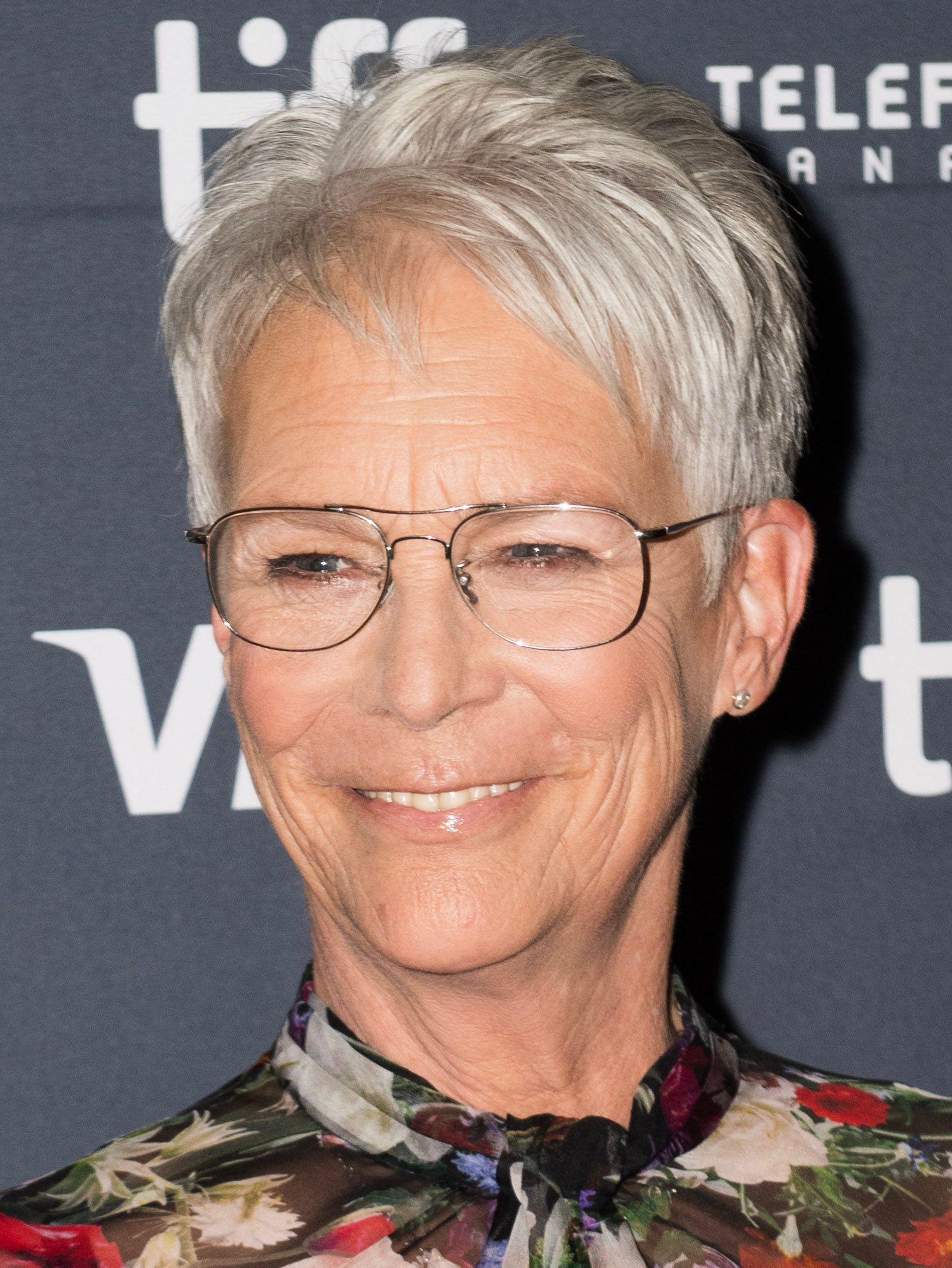
Photo: Jamie Lee Curtis, Keach's Roadgames co-star, via Wikimedia Commons ( author and license).

Class of 1999 (1990)
Mark L. Lester's follow-up to his own Class of 1984 casts Keach as Dr. Robert Forrest, the creepy architect of a program that puts combat androids in charge of a gang-ruled high school. Keach plays it with a slicked-back, faintly reptilian glee. It cost between $5.2 million and $7 million and made around $2.4 million, but its mix of killer-robot gore, Pam Grier and Malcolm McDowell has made it a VHS-era cult staple, complete with a Nine Inch Nails needle drop.
Body Bags (1993)
Showtime wanted its own Tales from the Crypt , hired John Carpenter and Tobe Hooper, then dropped the series after filming started. The surviving segments became the anthology Body Bags , which premiered on Aug. 8, 1993. In Carpenter's "Hair," Keach plays Richard Coberts, a businessman so obsessed with his thinning hair that he signs up for a miracle treatment from a clinic run by David Warner, with Sheena Easton and Debbie Harry along for the ride. What grows back is not hair. It's the funniest, nastiest thing in the film, and Keach commits fully to a man who would rather be devoured than bald.
Carpenter liked him enough to call again: three years later Keach played Commander Mac Malloy, the man who sends Kurt Russell's Snake Plissken into the wasteland in Escape from L.A. (1996). That $50 million sequel grossed about $42.3 million worldwide and killed plans for a third film, but Keach's sneering bureaucrat is part of why it plays better now than it did in 1996.
The deep cuts
Keach never looked down on the genre. His credits include the Italian cannibal adventure Slave of the Cannibal God (1978) with Ursula Andress, later swept up in Britain's "video nasty" panic; Children of the Corn 666: Isaac's Return (1999); Bruce Campbell's Man with the Screaming Brain (2005); and narration on the 1990s paranormal series Haunted Lives: True Ghost Stories. Not all of it is good. All of it is better for having him in it.
By the numbers
- Six decades on screen and stage, with more than 200 film and TV credits, per TMZ.
- 1 Tony nomination ( Indians , 1969), 4 Drama Desk Awards and 3 Helen Hayes Awards.
- 1 Golden Globe win ( Hemingway , 1988) and an Emmy nomination for the same role.
- 4 years as TV's Mike Hammer on CBS (1984-1987), plus a 1997-98 revival.
- 92% on Rotten Tomatoes for Roadgames , versus about A$100,000 at the Australian box office.
- 2 collaborations with John Carpenter: Body Bags (1993) and Escape from L.A. (1996).
- A star on the Hollywood Walk of Fame, received in 2019.
What it really means: the character actor horror depends on
Horror history tends to remember its icons, the Englunds and Hodders and Curtises, and forget the actors who quietly made the genre's odder experiments work. Keach belongs in a lineage with Donald Pleasence, Christopher Plummer and Max von Sydow: classically trained performers who brought total seriousness to material that could have collapsed into camp. Pleasence made Dr. Loomis believable. Von Sydow made Father Merrin feel ancient. Keach made a man arguing with a dingo in a truck cab, and a vain executive sprouting killer follicles, feel like real people with real fears.
That matters more than it sounds. Roadgames and The Ninth Configuration were both commercial failures on release, and both were rescued by home video, repertory screenings and critics who kept arguing for them. Each time, the performance at the center is a big reason the films survived long enough to be rediscovered. The same pattern is playing out right now with this decade's horror misfires that find their audience on streaming two or three years later: the films that last tend to be the ones with an actor who refused to wink.
It also says something about where genre sat in a serious actor's career. Keach went from Hamlet in Central Park to Blatty's madhouse to Carpenter's gross-out anthology without any sense that he was slumming. Today, prestige actors are pitched "elevated horror" as a safe space. Keach just did horror, at every budget level, because the parts were interesting.
What's next
No funeral or memorial details had been announced as of Wednesday evening. Tributes from former collaborators had not yet appeared in the reports we reviewed, though we expect more as the week goes on. If boutique labels or streamers move to spotlight his genre work, The Ninth Configuration and Roadgames are the two titles most overdue for a new audience.
Bottom line
Stacy Keach was a great Shakespearean, a great tough guy and, for horror fans, one of the most reliable faces in the genre's weirdest corners. Tonight is a good night to put on Roadgames , or to rewatch "Hair" and remember how much fun he was having. Our thoughts are with his wife, his children and his family.
Which Stacy Keach performance is your favorite: Roadgames , The Ninth Configuration , Body Bags or something outside horror entirely? Tell us below.
Header photo: Stacy Keach via Wikimedia Commons ( author and license), cropped with text added.

Recent STories